
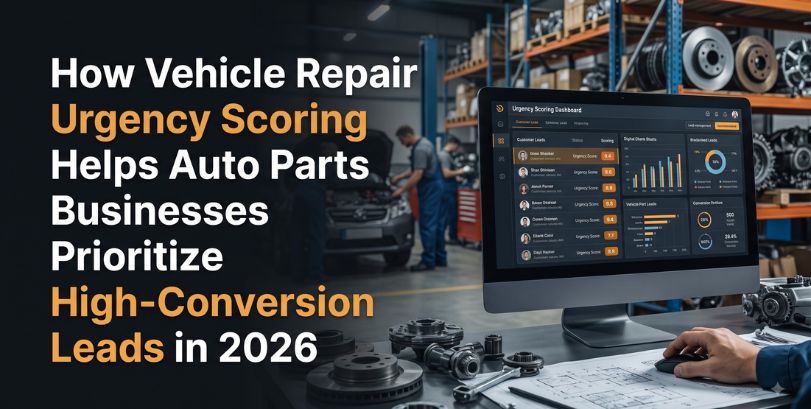
In the automotive aftermarket, responding quickly to the right buyer can make a significant difference in sales performance. Customers searching for replacement engines, transmissions, or other vehicle components often have different purchasing timelines depending on the severity of their repair requirements. A structured urgency-scoring system helps businesses evaluate incoming auto parts leads, identify buyers who need immediate assistance, and organize sales follow-ups more effectively. An experienced Automotive Lead Agency can support this process by helping businesses attract, qualify, and prioritize relevant prospects.
Understanding Vehicle Repair Urgency Scoring
Vehicle repair urgency scoring is a lead qualification method that assigns priority levels according to how quickly a potential customer needs an automotive component.
Not every inquiry represents the same purchasing opportunity. One customer may be researching replacement parts for a future repair, while another may have a vehicle that is currently unusable because of engine or transmission failure.
By evaluating factors such as vehicle condition, repair deadlines, part requirements, and purchase readiness, businesses can identify which inquiries deserve immediate attention.
A practical scoring model may categorize prospects into three groups:
- High urgency: Buyers with an immobilized vehicle, confirmed repair diagnosis, and an immediate requirement for a compatible part.
- Medium urgency: Customers planning a repair within a few weeks who are comparing availability, prices, and suppliers.
- Low urgency: Prospects conducting early research without a confirmed purchase timeline.
This classification helps sales teams allocate their time according to customer requirements rather than treating every inquiry equally.
Key Signals That Reveal Buyer Repair Urgency
Accurate lead scoring depends on collecting useful information during the initial inquiry. Auto parts businesses should focus on signals that indicate both repair urgency and purchasing intent.
- Vehicle Downtime: A customer whose vehicle cannot operate may need a replacement component quickly. Vehicle downtime is particularly relevant for commercial vehicles, delivery fleets, and customers who depend on their vehicles for daily transportation.
- Confirmed Diagnosis: An inquiry supported by a mechanic’s diagnosis or a confirmed part failure may indicate stronger purchase readiness than a general question about vehicle symptoms.
- Required Purchase Timeline: Ask when the customer expects to purchase the component. A buyer who needs an engine within a few days may require faster assistance than someone planning a repair several months ahead.
- Part Identification Details: Vehicle year, make, model, engine code, VIN, and OEM part number can help sales representatives assess compatibility requirements and determine whether the requested component can be sourced.
- Budget and Warranty Expectations: Understanding the customer’s budget and warranty preferences helps sales teams recommend suitable options without wasting time on incompatible offers.
Combining these signals provides a more useful picture of buyer intent and repair urgency.
How Urgency Scoring Improves Auto Parts Lead Conversion
A structured scoring system helps businesses prioritize follow-ups and reduce delays in the sales process.
For example, a buyer searching for a compatible replacement transmission because their vehicle is not operational may need immediate inventory verification. Another prospect comparing prices for a future maintenance project may be better suited to a scheduled follow-up.
Prioritizing inquiries can improve several business activities:
- Faster response times: High-priority buyers receive attention sooner.
- Better inventory matching: Sales teams can focus on parts that meet immediate customer requirements.
- More relevant communication: Representatives can tailor recommendations to repair timelines and compatibility needs.
- Reduced lead wastage: Businesses can avoid spending excessive time on inquiries with little immediate purchase intent.
- Improved sales planning: Lead categories help managers understand demand patterns and allocate resources.
However, urgency should not be confused with guaranteed conversion. A customer with an urgent repair may still face budget limitations, availability problems, or compatibility challenges.
The Role of an Automotive Lead Agency
An experienced Automotive Lead Agency can help aftermarket businesses develop more organized lead acquisition and qualification processes.
Rather than focusing exclusively on the number of inquiries generated, a lead generation partner can help businesses evaluate lead relevance, customer requirements, and purchase readiness.
Useful lead qualification activities may include:
- Collecting accurate vehicle and part information.
- Identifying customers with confirmed repair requirements.
- Recording purchase timelines and preferred contact methods.
- Separating immediate requirements from future purchasing interest.
- Filtering duplicate or incomplete inquiries.
- Organizing leads according to agreed qualification criteria.
Businesses should also establish clear communication between their marketing and sales teams. Feedback from sales representatives can reveal which urgency signals are genuinely associated with successful purchases.
Building a Practical Vehicle Repair Urgency Scoring Model
An effective scoring model should remain simple, measurable, and relevant to the business. For example, a company could assign points to the following factors:
| Qualification factor | Example score |
|---|---|
| Vehicle currently immobilized | 25 |
| Confirmed repair diagnosis | 20 |
| Purchase required within 7 days | 20 |
| Complete vehicle identification details | 15 |
| Confirmed budget and warranty expectations | 10 |
| Active response to sales follow-up | 10 |
| Total possible score | 100 |
Businesses can use these scores to establish high-, medium-, and low-priority categories. The scoring thresholds should be tested and adjusted using actual sales results rather than treated as universal industry standards.
It is also important to handle customer information responsibly. Collect only the vehicle and contact details needed for qualification, explain how the information will be used, and follow applicable privacy requirements.
Measuring Lead Quality Beyond Urgency
A strong qualification process should evaluate more than how quickly a customer needs a part. Businesses should monitor response time, contact rate, vehicle compatibility, quotation acceptance, purchase conversion, and reasons for lost sales. These metrics help determine whether high-scoring inquiries are actually producing better business outcomes.
Reviewing this information regularly allows companies to improve their scoring criteria and identify gaps in their lead generation process. For example, if many urgent inquiries fail because the requested components are unavailable, businesses may need better inventory coordination rather than simply generating more leads.
Final Thoughts
Vehicle repair urgency scoring helps automotive businesses identify customers who need replacement components quickly and organize their sales follow-ups more effectively. By evaluating vehicle downtime, repair diagnosis, purchasing timelines, and part compatibility, businesses can prioritize relevant auto parts leads and improve the customer experience.
Working with a reliable Automotive Lead Agency can further support lead qualification, targeting, and sales pipeline organization. Combining accurate customer information with measurable scoring criteria helps auto parts businesses focus on genuine buyer requirements and build a more efficient conversion process.