
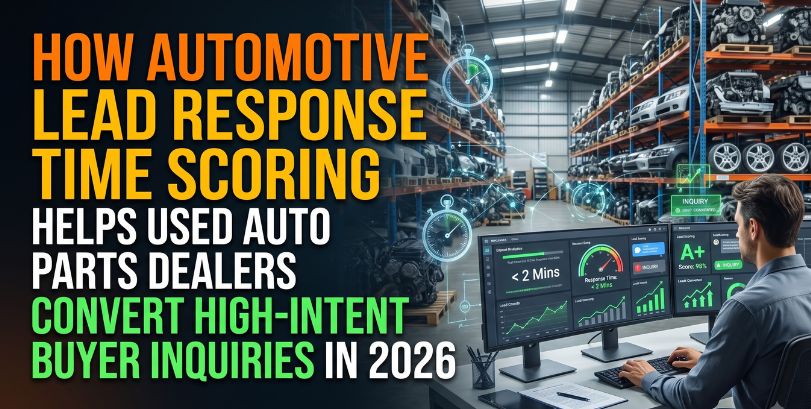
In the competitive automotive aftermarket, responding quickly to potential customers can make a significant difference in sales performance. Buyers searching for replacement engines, transmissions, and vehicle-specific components often contact multiple suppliers before making a purchase. Used auto parts dealers need an effective way to identify serious buyers and prioritize inquiries that are most likely to convert. A structured response time scoring system helps businesses manage auto parts leads, improve communication, and reduce missed sales opportunities.
In 2026, dealers can combine lead qualification, response-time tracking, and customer relationship management tools to build a more organized sales process. Working with an experienced Automotive Lead Agency can also help businesses attract relevant prospects and develop processes for handling inquiries efficiently.
What Is Automotive Lead Response Time Scoring?
Lead response time scoring is a method of evaluating how quickly a sales team responds to customer inquiries and how effectively those responses support conversions. Rather than treating every inquiry equally, dealers can assess factors such as the time of submission, buyer intent, product availability, and the urgency of the customer’s requirements.
For example, a customer requesting an engine compatible with a specific vehicle identification number (VIN) may be ready to purchase. Another visitor may simply be researching general replacement costs. Both inquiries deserve attention, but the first may require faster, more personalized follow-up.
A scoring framework helps sales representatives determine which inquiries need immediate action while maintaining consistent service for every prospect.
Why Response Time Matters for Used Auto Parts Dealers
Customers purchasing used automotive components often have urgent repair needs. A vehicle may be unusable until the correct engine, transmission, alternator, or other replacement part becomes available.
When dealers respond slowly, potential buyers may contact competitors with better communication processes. Delays can also create uncertainty about inventory, compatibility, shipping costs, and warranty coverage. A well-managed response process helps dealers:
- Contact high-intent buyers promptly.
- Reduce missed calls and unanswered inquiries.
- Confirm vehicle and part compatibility earlier.
- Provide accurate inventory and delivery information.
- Improve the customer experience throughout the purchasing process.
Fast responses alone do not guarantee sales. Accurate information, suitable inventory, transparent pricing, and reliable follow-up are equally important.
Key Factors Used in Lead Response Time Scoring
An effective scoring model should combine speed with the quality and commercial relevance of each inquiry.
1. Initial Response Time
Track the time between receiving an inquiry and making the first meaningful response. Automated acknowledgments can confirm receipt, but they should not replace personalized communication when a buyer needs specific information.
Dealers can establish internal service targets based on staffing, business hours, inquiry volume, and customer expectations.
2. Buyer Purchase Intent
Assess whether the prospect is requesting a quote, confirming availability, asking about warranty terms, or seeking general information. A buyer who provides a vehicle model, engine code, or transmission specification may be easier to qualify than someone submitting a broad request.
These details help sales representatives prioritize follow-up without assuming that every detailed inquiry will result in a purchase.
3. Inventory and Compatibility
A lead becomes more actionable when the requested part can be matched with available inventory. Representatives should verify fitment, part numbers, engine codes, and relevant vehicle details before promising availability.
This is particularly important for used engines and transmissions, where incorrect compatibility information can result in costly returns and customer dissatisfaction.
4. Follow-Up Consistency
Response scoring should also track whether representatives follow up after sending a quote or requesting additional vehicle information. A clear follow-up schedule can prevent promising inquiries from being forgotten.
CRM reminders, call logs, and email tracking can help teams maintain consistency.
How Dealers Can Implement a Scoring System
Used auto parts businesses can begin with a straightforward process instead of investing immediately in complex software. First, record every inquiry in a centralized CRM or lead management system. Capture its source, submission time, requested component, vehicle details, and current status. Next, assign priority levels using transparent rules.
For example, inquiries involving a confirmed part requirement, complete vehicle specifications, and an immediate purchase timeline may receive higher priority. Response delays can trigger alerts for the sales team. Finally, measure meaningful outcomes, including qualified lead rates, quote-to-sale conversion, average first-response time, and lost-inquiry reasons. Review these indicators regularly to identify bottlenecks and improve performance. Avoid judging representatives solely on speed. A quick but inaccurate answer can damage customer trust and create additional work.
How an Automotive Lead Agency Can Support Better Conversions
An experienced Automotive Lead Agency can help dealers develop a more consistent approach to lead generation and qualification. Depending on the services offered, an agency may help identify relevant buyer segments, improve inquiry forms, organize lead routing, and evaluate campaign performance.
For businesses purchasing auto parts leads, useful quality indicators include accurate contact information, relevant product requirements, geographic fit, and clear consent for contact where required. Dealers should also understand whether leads are exclusive or shared with other suppliers.
Lead providers and dealers can coordinate on agreed response standards, lead definitions, reporting methods, and conversion tracking. This makes it easier to distinguish between problems caused by lead quality and those caused by slow or inconsistent follow-up.
Measuring Results and Improving Sales Performance in 2026
A response scoring system should be reviewed using actual business results. Compare conversion rates across lead sources, product categories, response-time ranges, and sales representatives. Protect customer information and follow applicable privacy and communication requirements when collecting or processing lead data.
Use the findings to improve staffing, lead distribution, inventory visibility, and customer communication. Over time, these changes can help dealers allocate sales resources more effectively and identify which marketing channels deliver commercially valuable inquiries.
Final Thoughts
Automotive lead response time scoring helps used auto parts dealers organize inquiries, identify urgent purchase requirements, and maintain consistent follow-up. By combining response speed with buyer intent, compatibility checks, and conversion tracking, businesses can make better decisions throughout the sales process.
Whether a dealer generates inquiries independently or works with an Automotive Lead Agency, prioritizing relevant auto parts leads and responding with accurate information can support stronger customer relationships and more efficient sales operations.