
The automotive aftermarket is becoming increasingly competitive in 2026. Auto parts suppliers receive inquiries from different types of customers, including individual vehicle owners, repair shops, dealerships, fleet operators, and automotive businesses. While a large number of inquiries may appear positive, not every lead represents a genuine buying opportunity.
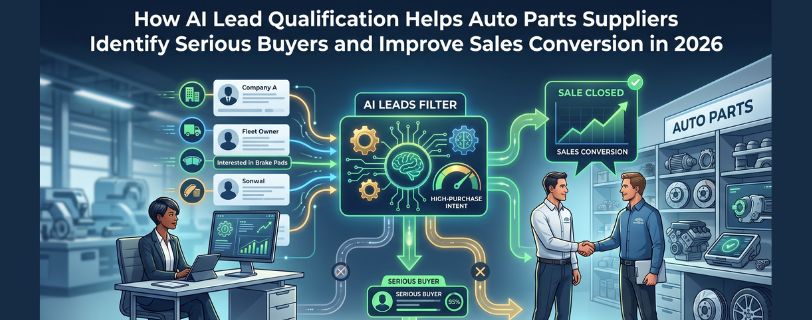
This is where artificial intelligence is changing the way automotive businesses manage prospects. AI lead qualification technology can analyze customer information, inquiry behavior, vehicle requirements, and engagement signals to help sales teams prioritize prospects with stronger purchase intent.
For businesses investing in Verified Car Parts Leads, AI qualification can add another layer of analysis by helping sales teams distinguish active buyers from low-intent inquiries. Working with an experienced Lead Generation Company can also help automotive businesses develop structured strategies for attracting and qualifying prospects more efficiently.
What Is AI Lead Qualification?
AI lead qualification is the use of artificial intelligence and automated data analysis to evaluate potential customers. Instead of treating every inquiry equally, an AI system can analyze available information and assign leads different priority levels.
Depending on the system, qualification may consider:
- Customer information
- Product requirements
- Vehicle details
- Purchase timeframe
- Previous interactions
- Website activity
- Email engagement
- Inquiry frequency
The goal is simple: help sales teams spend more time on prospects who are more likely to purchase.
Why Lead Quality Matters for Auto Parts Suppliers
Auto parts businesses can receive inquiries through many channels. These may include:
- Websites
- Search engines
- Social media
- Online marketplaces
- Phone calls
- Digital advertising
A high volume of inquiries does not necessarily result in high sales. Some prospects may only be researching prices, while others may be ready to place an order immediately. AI qualification helps suppliers identify these differences more efficiently.
How AI Identifies Serious Buyers
AI systems can analyze multiple signals to estimate buyer intent. For example, a prospect who provides a specific vehicle model, part number, required quantity, delivery location, and purchasing timeframe may demonstrate stronger buying intent than someone submitting a general inquiry. AI can organize these signals into a lead score. A high score may indicate that the prospect deserves faster sales follow-up. This does not guarantee a purchase, but it helps sales teams prioritize their time.
Understanding Verified Car Parts Leads
Verified Car Parts Leads can provide valuable opportunities for automotive suppliers because they are designed to contain more useful customer information than generic inquiries.
Verification processes may involve checking information such as:
- Customer contact details
- Vehicle requirements
- Requested parts
- Purchase interest
- Location
- Business requirements
The exact verification process varies between providers. AI qualification can work alongside lead verification by evaluating the information and behavior associated with each prospect.
AI Lead Scoring Improves Sales Prioritization
Lead scoring is one of the most useful applications of AI in automotive sales. A system may assign scores based on different signals. For example:
High Intent
- Specific part requested
- Immediate purchase requirement
- Complete vehicle information
- Clear budget or quantity
- Repeated engagement
Medium Intent
- Product interest
- Some vehicle details
- Price inquiry
- Moderate engagement
Low Intent
- General browsing
- Incomplete information
- No clear purchase timeframe
- Limited engagement
Sales representatives can then focus on high-priority prospects first.
Faster Follow-Up Can Improve Opportunities
Speed matters in the automotive parts industry. A customer who needs a replacement component may contact several suppliers at the same time. If one supplier responds quickly with relevant information while another takes hours or days, the faster supplier may have a better chance of winning the order. AI qualification helps identify important inquiries quickly so sales teams can respond without manually reviewing every lead.
How AI Helps Match Buyers With the Right Products
Auto parts businesses often manage large inventories. Customers may request components based on:
- Vehicle make
- Model
- Year
- Engine
- Transmission
- Part number
- VIN
AI-powered systems can organize this information and help sales teams identify what the buyer is looking for. This can reduce unnecessary back-and-forth communication. It can also help sales representatives prepare more relevant responses.
The Role of a Lead Generation Company
A professional Lead Generation Company can help automotive businesses attract prospects through targeted digital marketing campaigns.
These campaigns may use:
- Search engine optimization
- Paid advertising
- Landing pages
- Content marketing
- Email campaigns
- Social media marketing
However, generating inquiries is only the first step. The real value comes from attracting relevant prospects and developing a process for qualifying them.
AI can help connect marketing and sales by analyzing which leads are more likely to become customers.
AI Helps Reduce Sales Team Workload
Sales teams often spend significant time manually sorting and reviewing inquiries. AI automation can reduce this workload by organizing leads based on predefined criteria. For example, the system may automatically identify:
- Product-specific inquiries
- High-value customers
- Repeat buyers
- Urgent requirements
- Incomplete submissions
Sales representatives can then focus their attention on conversations that require human involvement.
Improving Customer Experience
AI qualification is not only about increasing sales. It can also improve the customer experience. When a buyer provides detailed requirements, the sales team can respond with more relevant information.
Instead of asking the customer to repeat basic details, representatives may already have access to:
- Vehicle information
- Required part
- Quantity
- Location
- Preferred timeline
This can make the purchasing process smoother.
AI and CRM Integration
Modern automotive businesses can integrate AI lead qualification with customer relationship management systems.
A CRM can store information about:
- Previous inquiries
- Purchases
- Customer communication
- Follow-up activities
- Lead status
AI can analyze this information and help sales teams determine which prospects need attention. This creates a more organized sales pipeline.
Identifying Repeat Buyers
Automotive businesses often serve repeat customers such as:
- Repair shops
- Dealerships
- Fleet operators
- Parts retailers
- Automotive workshops
AI systems can recognize repeat interactions and help identify customers with ongoing purchasing needs. A returning customer looking for several components may represent a valuable sales opportunity.
Predictive Lead Qualification in 2026
AI lead qualification is becoming increasingly predictive. Instead of simply identifying what a customer did, advanced systems can analyze patterns to estimate what the customer may do next.
Predictive models may consider:
- Historical buying behavior
- Engagement patterns
- Product interest
- Response times
- Customer profiles
This can help suppliers anticipate which leads deserve immediate attention.
Important Limitations of AI Lead Qualification
AI should support sales teams rather than completely replace human judgment. Automated systems can make mistakes when information is:
- Incomplete
- Incorrect
- Outdated
- Misleading
A high lead score does not guarantee a sale, and a low score does not always mean a prospect is unqualified. Sales representatives should still review important opportunities and communicate directly with customers.
How Suppliers Can Build a Better Lead Process
Auto parts businesses can improve lead management by following a structured approach:
- Define the ideal customer profile.
- Collect useful vehicle and product information.
- Verify lead information where possible.
- Use AI to score and prioritize inquiries.
- Respond quickly to high-intent prospects.
- Track follow-up activity.
- Measure conversion rates.
- Improve qualification criteria over time.
This creates a continuous process for improving lead quality and sales performance.
Future of AI-Powered Automotive Lead Management
The use of AI in automotive sales is expected to expand further.
Future systems may provide:
- Real-time intent detection
- Automated lead verification
- Predictive purchasing forecasts
- Intelligent sales routing
- Personalized customer communication
- Automated CRM updates
These capabilities can help automotive businesses manage larger lead volumes without proportionally increasing manual sales workload.
Final Thoughts
AI lead qualification is helping auto parts suppliers identify serious buyers and improve sales conversion in 2026. By analyzing customer information, vehicle requirements, engagement behavior, and purchase signals, AI systems can help sales teams prioritize prospects more effectively.
For businesses using Verified Car Parts Leads, AI can provide additional insight into which inquiries may deserve immediate attention. Meanwhile, partnering with an experienced Lead Generation Company can help suppliers attract targeted prospects and build a stronger lead pipeline.
The most effective strategy combines technology with human expertise. AI can organize and prioritize opportunities, but experienced sales professionals remain essential for understanding customer needs, confirming vehicle and part compatibility, negotiating purchases, and building long-term relationships.
As AI technology continues to improve, automotive suppliers that combine high-quality lead generation, reliable verification, intelligent qualification, and fast sales follow-up will be better positioned to turn more genuine buying opportunities into successful sales in 2026.