
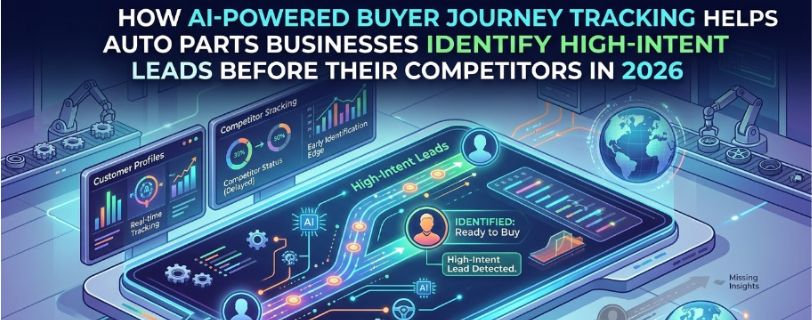
The auto parts industry is becoming increasingly competitive in 2026. Customers have more choices than ever, and many buyers spend significant time researching products before contacting a supplier. They may compare prices, check compatibility, read product information, request quotes, and visit multiple websites before making a final decision.
This creates a major challenge for auto parts businesses: how can they identify serious buyers before those customers purchase from a competitor?
AI-powered buyer journey tracking is helping businesses better understand how potential customers interact with their digital platforms. By analyzing patterns across website visits, product searches, inquiries, and other permitted customer interactions, AI systems can help identify signals that may indicate stronger purchase intent.
For an Auto Parts Lead Company, this technology can improve the process of identifying and qualifying potential buyers. It can also make auto lead generation more efficient by helping sales teams focus their attention on prospects who appear closer to making a purchase decision.
What Is Buyer Journey Tracking?
A buyer journey describes the steps a potential customer takes before completing a purchase. For an auto parts buyer, the journey may include:
- Searching for a replacement part
- Researching compatibility
- Comparing suppliers
- Viewing product pages
- Checking warranty information
- Requesting a quote
- Contacting a sales representative
Traditional marketing tools may show how many people visited a website. However, AI-powered buyer journey tracking can help businesses analyze patterns across multiple interactions to better understand where a potential buyer may be in the decision-making process.
How AI Helps Identify Purchase Intent
Not every website visitor is ready to buy. One person may simply be researching a vehicle problem, while another may be actively searching for a replacement engine or transmission.
AI systems can analyze behavioral patterns to identify potential indicators of intent. For example, a buyer who repeatedly:
- Searches for the same component
- Reviews compatibility information
- Visits pricing pages
- Reads warranty details
- Requests a quote
May show stronger purchase intent than someone who visits a single informational page and leaves immediately. AI can help organize these signals so businesses can prioritize leads more effectively.
Why High-Intent Leads Matter
Sales teams have limited time. If representatives spend too much time following up with people who have little interest in purchasing, they may miss opportunities with serious buyers. High-intent lead identification can help businesses focus on prospects who demonstrate stronger signals of interest.
This may improve:
- Sales productivity
- Response speed
- Lead qualification
- Marketing efficiency
- Customer engagement
For an Auto Parts Lead Company, identifying stronger purchase signals can help deliver more relevant opportunities to businesses looking for potential customers.
Understanding the Auto Parts Buyer Journey
The buyer journey for auto parts can be complicated. A customer may first search for a general phrase such as a replacement engine. Later, they may narrow their search by:
- Vehicle make
- Model
- Model year
- Engine size
- Engine code
- Part number
As their search becomes more specific, their buying intent may become clearer. AI-powered tracking can help identify these changes and recognize when a customer moves from general research toward a more specific purchasing decision.
AI-Powered Lead Scoring
Lead scoring is a process used to rank potential customers based on selected characteristics or behaviors. AI can help improve this process by analyzing larger amounts of data and identifying patterns associated with previous successful conversions.
A lead may receive greater attention based on relevant signals such as:
- Repeated website visits
- Product-page engagement
- Quote requests
- Compatibility searches
- Returning visits
- Inquiry activity
The goal is not to assume that every interested visitor will make a purchase. Instead, AI helps businesses prioritize prospects based on available signals.
Improving Auto Lead Generation
Traditional auto lead generation often focuses heavily on generating a large number of inquiries. However, a large number of leads does not always mean a large number of sales. AI-powered buyer journey tracking can help shift the focus toward lead quality.
Instead of simply asking, “How many leads did we generate?” businesses can also ask:
- Which leads are actively researching?
- Which prospects are comparing products?
- Which buyers have requested additional information?
- Which leads are showing stronger purchase intent?
This approach can help improve the efficiency of marketing investments.
Faster Sales Response
Speed is extremely important in the auto parts industry. A customer searching for a replacement engine may contact several suppliers within a short period. If one business responds quickly with relevant information while another takes hours or days, the faster supplier may have a better chance of starting the conversation.
AI-powered lead prioritization can help sales teams recognize potentially urgent opportunities and respond faster.
Personalizing the Buyer Experience
Different buyers have different needs. A repair shop may require detailed compatibility information, while an individual vehicle owner may need help understanding which replacement part is suitable.
AI-assisted systems can help businesses organize buyer information and provide more relevant communication. For example, a sales team may understand that a customer has been researching:
- A specific engine type
- Vehicle compatibility
- Warranty coverage
This can help representatives prepare more useful responses instead of sending generic messages.
Helping an Auto Parts Lead Company Deliver Better Opportunities
An Auto Parts Lead Company can use AI-powered analysis to improve how potential buyer inquiries are evaluated and routed. Rather than treating every inquiry as identical, the system can help identify differences in buyer behavior and engagement.
Potential benefits include:
- Better lead qualification
- Faster lead delivery
- Improved buyer matching
- Reduced manual review
- More efficient sales workflows
However, lead quality should always be evaluated using clear criteria, and businesses should avoid relying entirely on automated scores without human oversight.
AI and Competitive Advantage
Competitors may be receiving inquiries from the same market. The difference often comes down to who identifies and responds to serious buyers first. AI-powered buyer journey tracking can help businesses recognize meaningful engagement patterns earlier in the sales process.
This may allow teams to:
- Prioritize valuable prospects
- Respond more quickly
- Provide relevant information
- Improve follow-up timing
In competitive markets, better timing can be an important advantage.
Responsible Use of Buyer Data
As AI and analytics become more widely used, businesses should also handle customer information responsibly.
Companies should consider:
- Privacy requirements
- Consent requirements
- Applicable data protection laws
- Secure data storage
- Transparent data practices
AI-powered marketing should support better customer experiences without compromising privacy or misusing personal information.
The Future of Auto Lead Generation
AI is expected to become increasingly important in auto lead generation. Future systems may include:
- Automated lead routing
- AI-assisted sales recommendations
- Real-time engagement analysis
- Improved buyer-to-supplier matching
These technologies can help businesses process information faster, but successful sales will still depend on accurate information, competitive offers, and strong customer service.
Final Thoughts
AI-powered buyer journey tracking is changing how auto parts businesses identify potential customers in 2026. By analyzing relevant engagement patterns, AI can help distinguish between casual visitors and prospects who may be showing stronger purchase intent.
For an Auto Parts Lead Company, this technology can improve lead qualification and help businesses receive more relevant opportunities. At the same time, AI-driven insights can make auto lead generation more efficient by helping sales teams focus on buyers who appear further along in the decision-making process.
Technology alone cannot guarantee a sale. Businesses still need accurate product information, competitive pricing, fast responses, and knowledgeable customer service.
However, when AI-powered buyer journey tracking is combined with strong sales processes and responsible data practices, it can give auto parts businesses a valuable advantage-helping them identify high-intent opportunities and engage serious buyers before competitors do.