
Auto parts businesses receive inquiries from customers with very different needs. Some buyers may be looking for a specific engine or transmission, while others may need body components, electrical parts, suspension systems, or multiple replacement components. Responding to every inquiry through the same sales process can create delays and reduce opportunities to convert purchase-ready customers.
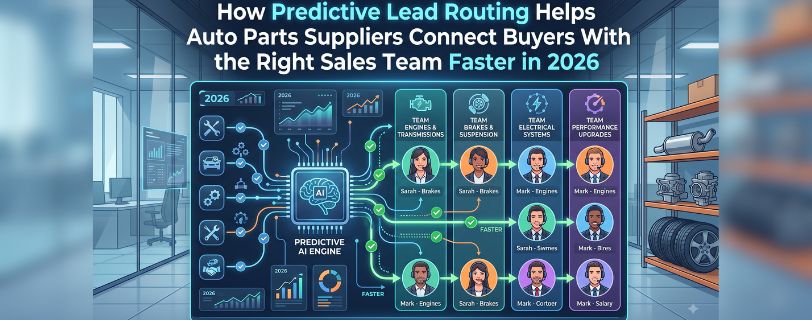
In 2026, predictive lead routing is helping auto parts suppliers organize incoming inquiries and connect potential buyers with the most appropriate sales representatives faster. By analyzing lead information, customer intent, vehicle requirements, product interests, and historical sales patterns, predictive systems can support more efficient lead distribution.
For businesses working with an Auto Lead Supplier, predictive routing can help improve how incoming opportunities are assigned. When combined with modern auto lead generation strategies, it can create a more structured process for moving qualified prospects from initial inquiry to sales conversation.
What Is Predictive Lead Routing?
Predictive lead routing is a technology-assisted process that determines which salesperson or sales team should receive a particular lead.
Instead of assigning leads randomly or manually, predictive systems can evaluate available information and identify factors such as:
- Buyer intent
- Product requirements
- Vehicle information
- Geographic location
- Lead source
- Previous interactions
- Sales team specialization
- Historical conversion patterns
The goal is to send each inquiry to the team best positioned to respond.
Why Lead Response Speed Matters
Automotive buyers often contact multiple suppliers when searching for parts. A delayed response can give competitors an opportunity to engage the same customer first.
Fast lead routing can help sales teams:
- Respond sooner
- Confirm product availability
- Verify compatibility
- Provide pricing information
- Answer technical questions
- Move qualified buyers toward purchase
Speed is especially important for customers dealing with vehicle repairs where downtime can create additional costs.
How Predictive Systems Evaluate Leads
Predictive routing systems can analyze information provided through forms, websites, calls, advertisements, and other customer interactions. Relevant signals may include:
- Requested product
- Vehicle make and model
- Model year
- Purchase timeframe
- Geographic location
- Previous inquiries
- Engagement behavior
- Estimated purchase value
The system can then assign a priority or routing recommendation.
Matching Buyers With Specialized Sales Teams
Auto parts suppliers often have sales representatives with different areas of expertise. For example, one team may specialize in:
- Used engines
- Transmissions
- Body parts
- Commercial vehicle components
- Performance parts
Predictive routing can direct an inquiry toward the representative with relevant product knowledge. This can reduce unnecessary transfers and improve the buyer experience.
Role of an Auto Lead Supplier
An Auto Lead Supplier can provide businesses with customer inquiries generated through different marketing channels. However, receiving leads is only the beginning.
The supplier and auto parts business need an efficient system for:
- Lead qualification
- Lead distribution
- Follow-up
- Customer communication
- Conversion tracking
Predictive routing can help businesses make better use of incoming opportunities by connecting each lead with the appropriate sales resource.
Improving Auto Lead Generation
Modern auto lead generation involves more than generating a large number of inquiries. Businesses increasingly focus on generating leads that demonstrate genuine purchasing intent.
High-quality lead generation may involve:
- Search engine marketing
- SEO
- Paid advertising
- Landing pages
- Online forms
- Automotive marketplaces
- Social media campaigns
- Content marketing
Predictive routing can then help determine how those leads should be handled.
Intent-Based Lead Routing
Not every inquiry has the same level of buying intent.
For example:
- Low-intent lead: A visitor is researching average replacement engine prices.
- Medium-intent lead: A customer asks about availability for a specific vehicle.
- High-intent lead: A buyer provides vehicle information and asks for a price and delivery timeframe.
Predictive systems can use these signals to prioritize leads appropriately.
Reducing Manual Lead Assignment
Manual lead assignment can become difficult when businesses receive hundreds or thousands of inquiries. Sales managers may need to consider:
- Team availability
- Product expertise
- Location
- Workload
- Lead priority
Automated routing can handle many of these factors in real time. This allows sales managers to focus more on strategy rather than repetitive administrative tasks.
Improving Sales Team Productivity
Predictive routing can help sales representatives spend more time on relevant conversations.
Instead of sorting through unrelated inquiries, salespeople can receive leads that better match their expertise.
Potential benefits include:
- Faster follow-up
- Better sales conversations
- Reduced administrative work
- Improved lead qualification
- Higher productivity
Actual results depend on data quality, routing rules, sales processes, and team performance.
Connecting Lead Data With CRM Systems
Predictive routing becomes more effective when integrated with customer relationship management platforms.
CRM integration can allow businesses to track:
- Lead source
- Contact history
- Assigned salesperson
- Follow-up status
- Customer interactions
- Conversion outcomes
This creates a more complete view of the sales process.
Importance of Lead Data Quality
Predictive routing is only as effective as the information it receives. Incomplete or inaccurate lead data can result in incorrect assignments.
Businesses should capture useful information such as:
- Customer contact details
- Vehicle information
- Required part
- Purchase timeframe
- Location
- Preferred contact method
Clear data improves routing accuracy.
Predictive Routing and Customer Experience
Customers generally prefer dealing with sales representatives who understand their requirements. A buyer searching for a transmission should not have to explain the same technical details to multiple representatives.
When the initial lead reaches the appropriate sales team, the conversation can begin with greater context. This can create a smoother customer journey.
Using Analytics to Improve Routing
Businesses can analyze historical sales data to determine which routing strategies produce the best outcomes.
Important metrics include:
- Response time
- Contact rate
- Qualification rate
- Conversion rate
- Revenue per lead
- Lead-to-sale time
These insights can help businesses continuously improve their routing rules.
Future of Predictive Auto Lead Management
Predictive lead routing is expected to become more advanced as AI and automation technologies develop. Future systems may incorporate:
- Real-time buyer intent analysis
- AI sales recommendations
- Automated lead qualification
- Predictive conversion scoring
- Dynamic salesperson matching
- Conversational AI
- Real-time inventory data
These capabilities could make automotive sales operations increasingly responsive.
Final Thoughts
Predictive lead routing is helping auto parts suppliers improve the speed and accuracy of lead distribution in 2026. Instead of treating every inquiry equally, modern systems can analyze buyer intent, vehicle requirements, product interests, location, and sales team expertise to determine where a lead should go.
For businesses working with an Auto Lead Supplier, effective routing can help ensure that incoming opportunities reach the appropriate sales representatives quickly. When combined with a strong auto lead generation strategy, predictive routing can create a more efficient path from initial customer interest to meaningful sales conversations.
Ultimately, generating leads is only one part of automotive sales success. Businesses also need the right data, fast response processes, knowledgeable sales teams, and consistent follow-up. Predictive routing brings these elements together to help auto parts suppliers make better use of every qualified buyer opportunity.